Internet trends move incredibly fast today. A random joke can suddenly appear everywhere within a few hours. Somebody turns a funny phrase into a meme, another person makes a reel about it, and before long thousands of users are repeating the same joke across different platforms.
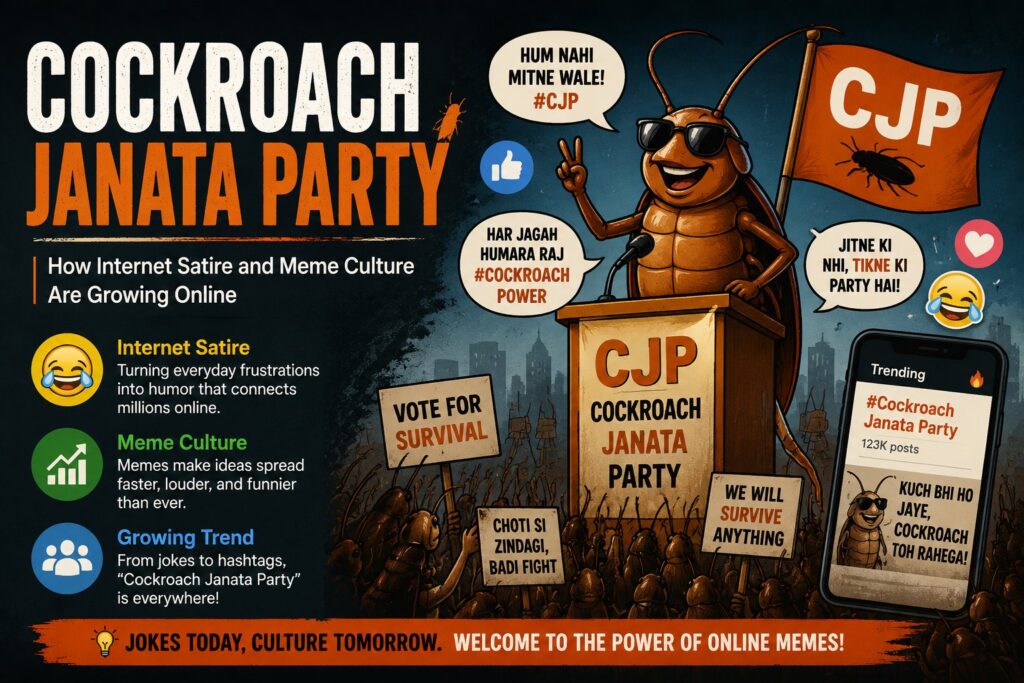
One phrase that has recently started getting attention online is “Cockroach Janata Party.”
The name sounds ridiculous at first, and honestly, that is probably why people remember it so quickly. In most online discussions, the phrase is not used literally. It is usually shared as satire or symbolic humor while talking about repetitive situations, online drama, or trends that somehow keep returning again and again.
There is no officially registered organization connected to the phrase. It mostly exists as an internet parody joke built around exaggeration, sarcasm, and meme culture.
And that is pretty common online now. A random phrase becomes funny simply because enough people decide to keep repeating it.
Table of Contents
ToggleWhy Cockroach Janata Party (CJP) Became Viral
Social media platforms reward content that catches attention immediately. Long explanations often get ignored, while strange jokes and unexpected phrases travel online much faster.
A phrase like “Cockroach Janata Party” makes people stop scrolling for a second because it sounds so unusual.
That tiny moment of curiosity is often enough for memes to spread.
Most viral jokes today move through screenshots, short videos, reposted memes, reaction posts, and comment sections rather than serious discussions. Many users share content casually without even knowing where it originally came from.
At times, internet humor behaves almost like school gossip. One person posts something funny, others remix it slightly, and suddenly the same joke starts showing up everywhere.
That is one reason meme-driven conversations dominate online culture today.
Who Created the “CJP” Meme?
One interesting thing about internet culture is that many viral trends do not have one clear creator.
The phrase “Cockroach Janata Party,” often shortened jokingly as “CJP,” appears to have spread gradually through meme pages, parody posts, edited images, and online comment sections. Different users started adding their own fake slogans, imaginary party symbols, and satirical campaign-style jokes around the phrase.
That collaborative humor is very common online.
Sometimes a meme becomes so widespread that people completely forget who posted the original version first. Even the person who created the joke may later see it circulating everywhere without their name attached to it.
That happens on the internet all the time.
Why Cockroaches Are Used Symbolically in Memes
Cockroaches have been part of jokes and cartoons for years. Most people connect them with survival, persistence, and the ability to keep coming back repeatedly.
Because of that image, online communities sometimes use cockroaches symbolically while joking about trends, habits, or situations that never fully disappear.
For example, somebody frustrated with repetitive internet arguments may jokingly say: “This topic returns every month like a cockroach.”
Similarly, people sometimes compare recurring software bugs, spam messages, or endless social media drama to cockroaches because the same issues keep reappearing again and again.
The humor mainly comes from exaggeration. Social media usually rewards dramatic and unexpected jokes far more than normal observations.
Memes regularly use animals, fictional characters, movie scenes, and random objects to represent emotions or public reactions. Cockroaches simply became another recognizable symbol that internet humor occasionally reuses.
Meme Culture Is Changing Online Communication
A few years ago, memes were treated mostly as side entertainment. Today, they influence how people react to news, office life, celebrity drama, sports, and public discussions.
Sometimes a meme communicates frustration faster than a long opinion post ever could.
That shift changed online communication more than many people realize.
Most audiences scrolling through apps prefer content that feels quick, relatable, and emotionally familiar. Humor naturally fits that environment better than lengthy explanations.
This is one reason meme culture keeps growing across Instagram, Reddit, X, Facebook, and YouTube Shorts.
Even people who avoid serious debates still interact with meme content because humor feels lighter and easier to consume during busy or stressful days.
Office meme culture is a good example. Instead of writing long complaints about deadlines or endless meetings, employees now share funny memes because the humor instantly feels relatable to others.
Satire Existed Long Before Social Media
Even though internet memes feel modern, satire itself is much older.
Newspapers once depended heavily on cartoons and caricatures to criticize public systems and social behavior. Later, television comedy shows used parody sketches and political humor to discuss current events.
Social media simply made everything faster.
Today, anybody with a smartphone can create edited videos, reaction memes, parody posters, sarcastic captions, or fictional campaigns within minutes. Occasionally, a joke posted casually by a small account suddenly reaches millions of viewers overnight.
That unpredictability is part of what makes internet culture feel chaotic and entertaining at the same time.
Sometimes even the original creator becomes surprised after seeing their meme suddenly appear everywhere online.
Why Relatable Humor Works So Well Online
Most viral jokes succeed because they feel familiar in some way.
People usually enjoy memes more when the joke connects with experiences they already recognize from everyday life. It could be exam stress, awkward online arguments, office meetings that never end, or constant internet drama.
For instance, students regularly share memes about late-night studying, while office employees joke about unrealistic deadlines and nonstop emails. Those jokes spread because many people instantly understand the situation behind them.
Humor also makes stressful discussions feel less exhausting for a while.
During intense news cycles or endless online arguments, funny content gives people a short mental break. A meme can trigger an emotional reaction within seconds, while serious discussions normally require far more attention and energy.
You can see this happening almost every day across social media platforms.
There Is a Difference Between Humor and Toxicity
While satire can be entertaining, internet humor still has limits.
People generally enjoy meme content more when it stays creative and light-hearted. Problems usually begin when jokes turn into harassment, misinformation, or personal attacks.
Content moves so quickly online now that even a casual meme can suddenly reach audiences far beyond its original context.
Because of this, many creators have become more careful about balancing humor with responsibility, especially while discussing sensitive topics.
Healthy satire usually works best when it creates conversation without creating unnecessary hostility.
Modern Memes Almost Feel Like Their Own Language
One unusual thing about meme culture today is how quickly people understand joke references without needing detailed explanations.
A strange phrase like “Cockroach Janata Party” immediately signals satire to many users, even if they have never seen the original meme before.
That shared understanding helps jokes circulate extremely fast online.
At this point, internet humor almost works like its own language. A short sarcastic caption, reaction image, or exaggerated phrase can instantly communicate frustration, sarcasm, excitement, or criticism to huge groups of people online.
And the speed keeps increasing every year.
Yesterday’s viral joke can easily disappear by next week and get replaced by something completely different. Honestly, that constant change is part of what makes internet culture both entertaining and unpredictable.
Conclusion
“Cockroach Janata Party” is ultimately just one example of how modern meme culture turns random humor into viral online conversation.
The phrase itself may sound silly, but it reflects a much larger internet trend where exaggeration, satire, and symbolism blend naturally into digital communication.
Internet culture is evolving quickly, similar to how AI tools are changing real-world work environments. They influence how people react to trends, share opinions, and participate in online culture every single day.
Some meme trends disappear quickly. Others continue resurfacing for years in different forms.
But one thing is clear, internet humor has become a permanent part of online communication, and phrases like “Cockroach Janata Party” will probably continue appearing across meme communities as social media keeps evolving.
Frequently Asked Questions (FAQ)
What is Cockroach Janata Party?
Cockroach Janata Party is an internet-style satirical phrase used in memes and online discussions.
Is Cockroach Janata Party a real political party?
No, it is mainly used as a humorous or symbolic meme phrase online. It isn’t registered with the Election Commission of India or any recognized political system.
Why are cockroaches used in internet satire?
Cockroaches are often used symbolically to represent persistence and situations that keep returning repeatedly.
Why did the Cockroach Janata Party meme become viral?
The phrase became popular because of its unusual name, meme potential, and shareable humor.