
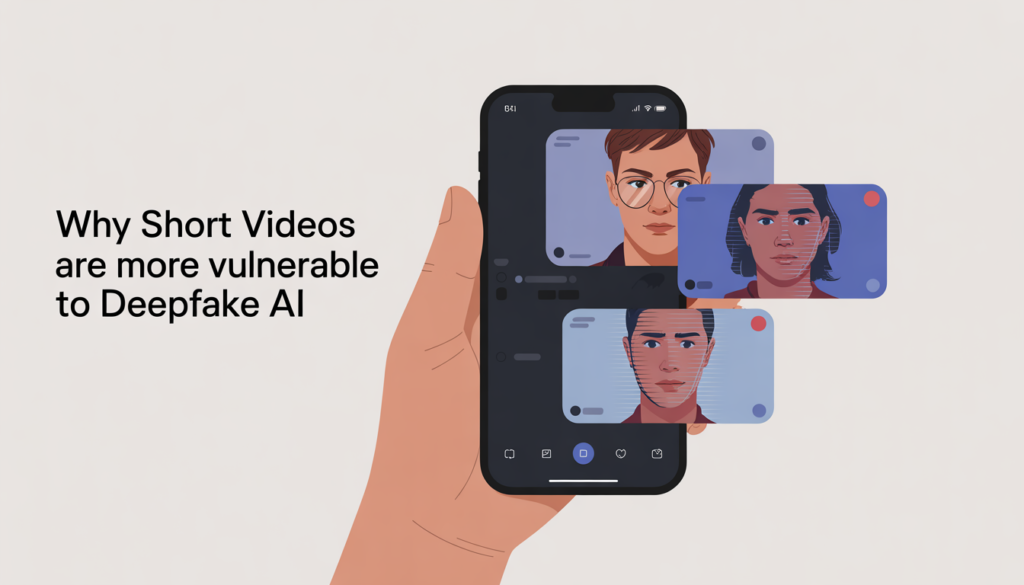

Why Short Videos on Social Media Are Harder to Trust Because of Deepfake AI

deepfake AI on social media

Short videos now dominate how people consume social media content. In just a few seconds of scrolling, users can see opinions, entertainment, news updates, and personal stories from all over the world. Platforms like TikTok, Instagram, and YouTube Shorts have transformed short clips into powerful tools that shape opinions and influence behaviour.

However, this speed comes with a disadvantage.

As videos become shorter and more realistic, it is getting harder to tell what is original and what is not. Deepfake AI on social media is quietly becoming part of daily content, often without viewers realizing it. What once required advanced technical skills can now be done with just a few simple clicks, raising serious concerns about authenticity, trust, and digital safety on social platforms.

Short video platforms were designed only for speed. Videos play automatically, algorithms push content aggressively, and users swipe endlessly without stopping to check what they see.

This environment is perfect for showcasing content creators’ creativity, but it is also ideal for misuse.

Unlike written content or long videos, short clips rarely provide context. A 15-second video can go viral without any source, background, or explanation. When deepfake AI enters this place, the risks multiply quickly.

What Is Deepfake AI?

Deepfake AI

Deepfake AI is a technology that uses artificial intelligence to create realistic fake faces, videos, or voices. It can make someone appear to do something they never actually did.

Earlier versions of deepfake AI technology were easy to identify. Voices sounded robotic, faces looked unnatural, and movements felt off. Today, that is no longer the case.

Modern deepfake tools can:

  • Make voices with natural emotion
  • Replicate facial expressions accurately
  • Sync lips perfectly with generated speech
  • Produce videos that look authentic on small screens

For short video platforms, this level of realism is especially dangerous.

Why Short Videos Are More Vulnerable to Deepfake AI

Small Screens Hide Visual Errors

Many deepfake AI flaws still exist, but they are harder to notice on mobile screens.

Subtle issues like:

  • Minor lighting mismatches
  • Slight eye movement delays
  • Micro facial inconsistencies

often go unnoticed in short videos viewed on phones.

Short Attention Spans Reduce Critical Thinking

Many users scroll through dozens of videos in a minute. There is little time to pause and question authenticity.

When a video looks real and feels emotional, our brain accepts it quickly. Deepfake AI takes advantage of this natural behaviour.

Audio Deepfakes Are Harder to Detect Than Video

Many short videos rely mostly on voice — phone calls, narrations, or reactions. AI-generated voices now sound natural enough to make even close family members or friends believe it.

This makes short videos with voice-overs especially dangerous, as viewers often trust what they hear more than what they see.

Algorithms Reward Engagement, Not Accuracy

Social media algorithms prioritize:

  • Likes
  • Emotional reactions
  • Shares
  • Watch time

They do not verify whether a video is real before pushing it to millions of users. Deepfake content that triggers anger, shock, or curiosity spreads faster than factual content.

How Deepfake AI Is Changing Online Trust

Nowadays the impact of deepfake AI goes beyond entertainment. It also affects how everyone trusts digital content as a whole.

Some effects include:

  • Confusion between fake and authentic content
  • Growing skepticism toward original videos
  • Reduced trust in social media platforms
  • Emotional manipulation through fabricated stories

Ironically, as fake content improves, original content starts being questioned.

Real-World Areas Where Deepfake Videos Are Causing Concern

Social Awareness and News

Short videos showing dramatic events often spread without verification. Deepfake AI can alter facts before corrections are ever seen.

Personal Reputation

Ordinary people, not just celebrities, are now at risk. A manipulated short video can spread quickly and harm someone’s reputation before the truth has time to come out.

Financial Scams

AI-generated voices and videos are increasingly used in digital fraud, especially when combined with urgency or authority.

Why Deepfake Detection Is Difficult on Social Media

In spite of improvements in AI detection tools, deepfakes remain hard to identify because:

  • Social media platforms rely heavily on user reporting
  • AI evolves faster than detection systems
  • Context is often missing in short videos

AI detection tools work best when users already suspect manipulation, which is not always the case.

How Users Can Protect Themselves

While technology plays a significant role, user awareness remains the strongest defence.

Simple habits that help:

  • Pause before sharing emotional content
  • Always look for the original source
  • Be cautious of videos with no proper background
  • Watch for unnatural expressions or speech

Cross verify major claims on trusted websites

These steps do not require any technical knowledge, just digital awareness.

What Social Media Platforms Are Doing

Social media platforms are slowly responding by:

  • Partnering with fact-checking partners and AI verification tools like Grok
  • Adding AI-generated content labels
  • Improving reporting tools
  • Investing in deepfake AI detection research

However, progress remains irregular, and responsibility still falls partly on users.

The Future of Short Videos in an AI Era

Deepfake AI is not going away anytime soon. In fact, it will continue to improve.

The future of short videos depends on:

Trust will not come overnight, but awareness is the first step.

Conclusion

Short videos are engaging, powerful, and here to stay. But as deepfake becomes more advanced, trust can no longer be automatic.

In 2026, being a digital consumer means questioning everything we see, not out of fear, but out of responsibility. AI technology evolves quickly, and so must our ability to understand it.

The goal is not to avoid short videos, but to consume them with awareness.

Related Posts

Leave a Reply

Your email address will not be published. Required fields are marked *