
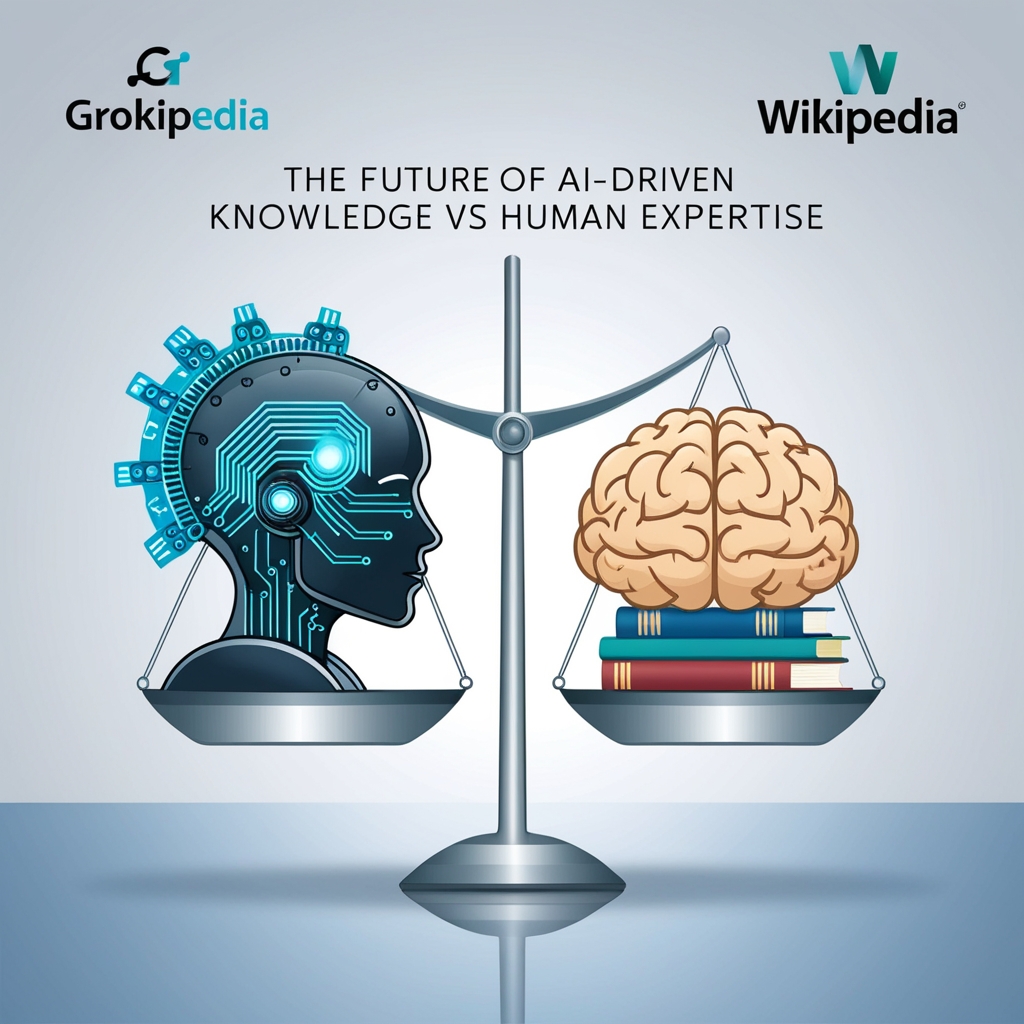
Over the last 2 decades, Wikipedia has grown into a trusted source of information for millions of people worldwide. From teachers and students to journalists and researchers, it has changed the way we search for and use knowledge online.
However, the fast growth of AI has brought a new type of information that is interactive, instant, and adaptable. A new concept in this space is “Grokipedia,” a term commonly used to describe AI-generated knowledge shared by tools like Grok AI from xAI.
This raises an important question to all: can AI-powered knowledge platforms like Grokipedia and others compete with, or even replace, Wikipedia? In this post, we take a clear and balanced look at Grokipedia vs Wikipedia. We research how each one works, their strengths, weaknesses and what the future of online knowledge platforms could look like.
Table of Contents
ToggleWhat Is Wikipedia?
Wikipedia is the world’s largest free online encyclopedia. It is created and maintained by a global community of volunteers. Billions of contributors follow clear editorial rules to ensure that information is accurate, neutral and backed by reliable sources.
Wikipedia content is:
Written by real people
Improved and reviewed by other human editors
Supported with references from trusted publications
Stored as permanent articles that are updated continuously over time
The biggest strength of Wikipedia is its transparency and trust. Readers can check edit histories and source citations, which makes it one of the most respected and reliable information platforms on the internet.
What Is Grokipedia?
As of now Grokipedia is not an official product or a separate website like Wikipedia. It is an informal term used to describe how AI tools, such as Grok AI, provide encyclopedia like answers instantly. Instead of storing pre-written articles, this knowledge is created by artificial intelligence in real time when someone asks a question.
Grok AI, built by xAI, focuses on giving conversational, fast and context-aware replies. Unlike traditional encyclopedias, it does not depend on static pages written long ago. It generates answers by combining its training, the user’s question, and the current context to deliver information on the spot.
Some key features of Grokipedia knowledge are:
Data generated by AI, not edited by humans
A conversational and friendly style instead of formal academic language
Responses that adjust based on follow-up questions
Quick coverage of real-time and trending topics
In simple words, Grokipedia presents knowledge as an ongoing conversation, not a fixed article.
How Information Is Created: Humans vs AI
One of the major differences between Grokipedia and Wikipedia is how information is created.
Wikipedia (Human-Edited Knowledge)
Articles are created by human contributors and written manually.
Content goes through discussions, edits and revisions
All sources are clearly listed and easy to check
Neutrality and accuracy are prioritized over speed
Grokipedia (AI-Generated Knowledge)
Information is generated instantly by an AI system
There are no permanent articles until a question is asked
The answers may vary based on the context provided and the question is phrased
Speed is given priority instead of formal verification
This basic difference is the reason both platforms meet very different user needs.
Accuracy and Trustworthiness
Accuracy is an area where Wikipedia still holds a clear upper hand.
Grokipedia, in comparison, depends on an AI model to generate answers.
This doesn’t make Grokipedia useless or unreliable. However, it means users should see it as a helpful starting point rather than a final source.
Speed and Freshness of Information
This is an area where Grokipedia performs better than Wikipedia.
Grokipedia can explain trending topics, breaking news and new technologies in no time. In comparison, Wikipedia articles often take days or even weeks to be updated, especially during fast-moving events.
For those seeking quick summaries or quick explanations of ongoing discussions, AI-powered knowledge platforms feel much faster responsive.
User Experience
Wikipedia uses a neutral and formal writing style. While this works well for research and academic purposes, it can feel difficult for casual readers.
Grokipedia answers are usually:
Conversational
Easy to understand
Flexible based on the user’s knowledge level
Because of this, AI-generated knowledge is especially appealing to beginners, professionals and content creators who want clear explanations without unnecessary complexity.
Use Cases
Use Wikipedia when:
Need reliable and verified facts
You are doing professional, academic or in-depth research
Require proper references and citations
Accuracy matters more than speed
Use Grokipedia when:
You want an easy and quick explanation
When you are learning about a new topic
Need simple summaries
When you want to ask follow-up questions and get instant answers
Smart users often combine both Grokipedia and Wikipedia to get the best results.
Can Grokipedia Replace Wikipedia?
The answer is no, at least not for now.
Grokipedia is excellent when it comes to ease of use, speed and clear explanations. However, it still falls short in areas such as:
Transparent and clear sources
Human review and editorial control
Long-term reliability for academic or research
Even though Wikipedia may be slower to update, it continues to stand out for its structure, trust and credibility.
Instead of replacing one another, the future is more likely to see both existing side by side, each serving a different purpose.
The Future of Knowledge Platforms
The future of online knowledge will most likely follow a hybrid approach:
- AI will help translate, summarize and personalize content created by humans
AI tools like Grok will offer easy and fast explanations
Platforms such as Wikipedia will continue to provide trusted and reviewed information
Rather than competing, AI systems and human-driven encyclopedias are likely to work together to build a smarter, more accessible information ecosystem for everyone.
Conclusion
Wikipedia and Grokipedia follow two very different approaches to sharing knowledge.
Grokipedia: Quick, flexible and conversational making it great for learning and exploring new ideas.
Wikipedia: Organized, reviewed and dependable, which makes it ideal for trusted references.
In today’s world, the smartest choice isn’t selecting one over the other, but understanding when to use each. As AI continues to advance, how we access information will change, but the importance of human-verified knowledge will always remain essential.


One thought on “Grokipedia vs Wikipedia: AI-Driven Knowledge vs Human Expertise”